
Views: 0
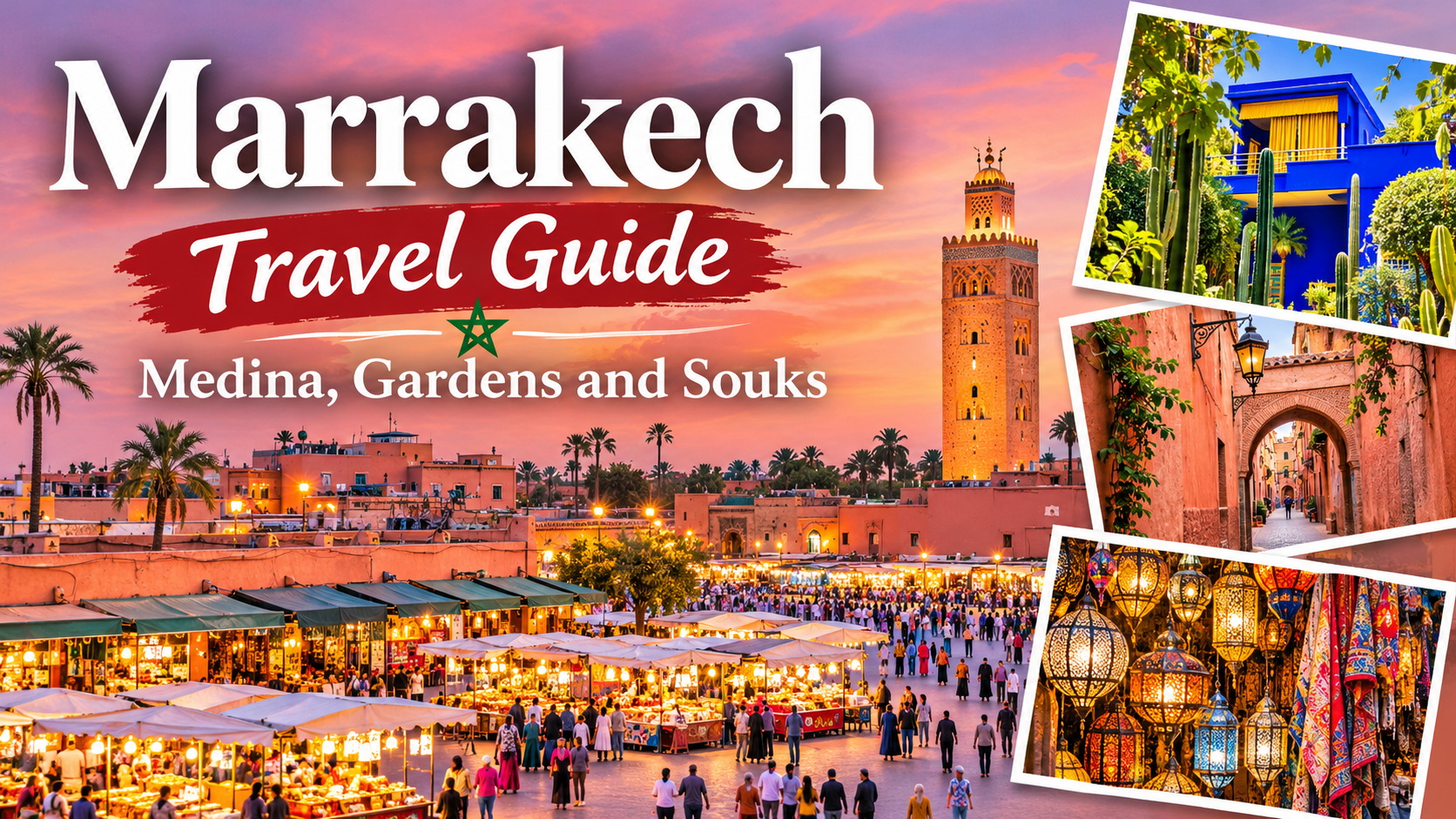
Marrakech Travel Guide: Medina, Gardens and Souks
Marrakech, known as Morocco’s Red City, is a fascinating destination filled with historic palaces, colorful markets, peaceful gardens, and unforgettable cultural experiences. From the lively streets of the Medina to the spectacular blue architecture of Jardin Majorelle, Marrakech offers a unique combination of history, art, shopping, and traditional Moroccan hospitality.

Whether you are planning a short city break or a longer Moroccan adventure, this Marrakech travel guide explores the best places to visit, the city’s famous souks, its beautiful gardens, traditional cuisine, and practical travel tips.
1. Explore the Historic Medina of Marrakech
The Medina is the historic heart of Marrakech and one of the city’s most captivating attractions. Recognized as a UNESCO World Heritage Site, this ancient district is surrounded by reddish walls and filled with narrow streets, traditional homes, local markets, and remarkable architectural landmarks.

Walking through the Medina is an adventure in itself. Visitors encounter artisan workshops, traditional riads, beautiful wooden doors, decorative Moroccan tiles, and small shops selling everything from spices to handmade carpets.
Historic Landmarks Worth Visiting
- Bahia Palace: A magnificent 19th-century palace featuring intricate decorative details, courtyards, and gardens.
- Ben Youssef Madrasa: A historic Islamic college celebrated for its stunning geometric tilework and carved cedarwood.
- Koutoubia Mosque: One of the city’s most recognizable landmarks, famous for its impressive minaret.
- Traditional Riads: Historic Moroccan homes built around beautiful interior courtyards, many now operating as boutique hotels.

Travel tip: Visit the Medina early in the morning when temperatures are often more comfortable and the narrow streets are generally less crowded.
2. Experience Jemaa el-Fnaa Square
Jemaa el-Fnaa is Marrakech’s famous public square and one of the most vibrant places in Morocco. During the daytime, the square features juice vendors, market stalls, and street performers. By evening, it transforms into a lively gathering place with food stalls, musicians, and visitors from around the world.
One of the best experiences is watching the sunset from a rooftop café overlooking the square. Enjoy traditional Moroccan mint tea while watching the lights illuminate the surrounding streets.
Travel tip: Agree on prices before purchasing goods or services, and ask permission before photographing performers or other people.
3. Discover the Famous Marrakech Souks
Shopping in the traditional souks is an essential Marrakech experience. These interconnected markets are among the most colorful and atmospheric places in the city, offering visitors a fascinating introduction to Moroccan craftsmanship.

What to Buy in Marrakech Souks
- Moroccan Lanterns: Decorative metal lanterns with intricate patterns.
- Traditional Rugs: Handwoven carpets featuring distinctive Berber and Moroccan designs.
- Leather Goods: Handmade bags, slippers, belts, and accessories.
- Moroccan Ceramics: Colorful pottery, decorative plates, and traditional tableware.
- Spices: Fragrant spice blends, saffron, cumin, and other ingredients used in Moroccan cuisine.
- Traditional Clothing: Djellabas, kaftans, and embroidered garments.

Shopping tip: Friendly bargaining is customary in many souk stalls. Compare prices, inspect craftsmanship carefully, and negotiate respectfully before making a purchase.
4. Relax at Jardin Majorelle
Jardin Majorelle is one of Marrakech’s most beautiful and photographed attractions. This botanical garden is famous for its striking cobalt-blue architecture, exotic plants, shaded walking paths, and peaceful atmosphere.

Created by French painter Jacques Majorelle, the garden was later acquired and preserved by fashion designer Yves Saint Laurent and Pierre Bergé. Today, it remains a celebrated example of botanical beauty and artistic design.
Visitors can admire towering cacti, bamboo groves, tropical plants, fountains, and the garden’s unforgettable blue structures.
Travel tip: Book tickets in advance through the official Jardin Majorelle website, and confirm your entry time before arriving.
5. Visit the Beautiful Menara Gardens
Menara Gardens offer a peaceful escape from the busy streets of central Marrakech. Famous for their large reflective pool, historic pavilion, and surrounding olive groves, the gardens are a popular destination for relaxing walks and photography.

On clear days, the Atlas Mountains can provide a beautiful backdrop to the gardens. Late afternoon is particularly appealing when the sunlight creates warm colors across the landscape.
6. Admire the Koutoubia Mosque
The Koutoubia Mosque is one of Marrakech’s most iconic architectural landmarks. Its impressive minaret rises above the city and serves as a recognizable point of reference while exploring the surrounding neighborhoods.

Built during the Almohad period, the mosque is an outstanding example of Moroccan Islamic architecture. Although non-Muslim visitors cannot enter the prayer hall, the exterior and surrounding gardens are well worth visiting.
7. Taste Traditional Moroccan Cuisine
Marrakech is an excellent destination for travelers who enjoy discovering local food. Moroccan cuisine combines aromatic spices, slow-cooked meats, fresh vegetables, and centuries-old culinary traditions.

Traditional Dishes to Try
- Tagine: A slow-cooked dish prepared with meat or vegetables and aromatic spices.
- Couscous: Steamed semolina traditionally served with vegetables and meat.
- Harira: A flavorful Moroccan soup commonly prepared with tomatoes, lentils, and chickpeas.
- Pastilla: A delicate pastry combining savory and sweet flavors.
- Moroccan Mint Tea: A traditional drink closely associated with Moroccan hospitality.
For an authentic dining experience, consider a traditional Moroccan restaurant or a beautifully decorated riad courtyard.
8. Suggested Three-Day Marrakech Itinerary
Day 1: Historic Marrakech
- Explore Bahia Palace.
- Walk through the historic Medina.
- Visit Ben Youssef Madrasa.
- Browse the traditional souks.
- Spend the evening at Jemaa el-Fnaa Square.
Day 2: Gardens and Architecture
- Visit Jardin Majorelle in the morning.
- Explore the surrounding Guéliz neighborhood.
- Enjoy a traditional Moroccan lunch.
- Relax at Menara Gardens.
- Admire the exterior of Koutoubia Mosque.
Day 3: Culture and Relaxation
- Explore additional artisan workshops in the Medina.
- Enjoy a traditional Moroccan hammam experience.
- Visit local galleries or take a Moroccan cooking class.
- Shop for souvenirs and handicrafts.
- Finish with dinner in a traditional riad.
9. Essential Marrakech Travel Tips
Best Time to Visit Marrakech
Spring, particularly March through May, and autumn, from September through November, generally provide pleasant weather for walking through the Medina and visiting outdoor attractions. Summer afternoons can be very hot.
Where to Stay
Traditional riads in the Medina are ideal for visitors who want a memorable Moroccan atmosphere. Guéliz offers modern accommodation, restaurants, and shopping, while Hivernage is known for its upscale hotels.
Getting Around Marrakech
Walking is often the best way to explore the historic Medina, although many narrow streets are shared with motorcycles and other local traffic. For longer journeys, use licensed taxis or prearranged transportation.
Money and Shopping
The local currency is the Moroccan dirham (MAD). Carrying cash in smaller denominations is useful for traditional markets, cafés, and smaller purchases.
Respect Local Customs
Respect local traditions, dress appropriately at historic and religious sites, and request permission before taking photographs of individuals.
10. Why Marrakech Should Be on Your Travel List
Marrakech is more than a sightseeing destination. It is a city full of colors, craftsmanship, architecture, flavors, and centuries of cultural heritage.
Visitors can spend the morning discovering ancient palaces, the afternoon relaxing among exotic gardens, and the evening exploring illuminated markets filled with traditional food and music.
Conclusion
From the bustling Medina and colorful souks to the serene beauty of Jardin Majorelle and Menara Gardens, Marrakech offers an extraordinary introduction to Morocco’s cultural heritage.
Whether you are interested in history, photography, architecture, traditional shopping, or authentic Moroccan cuisine, the Red City promises a rich and memorable travel experience.
Plan your Marrakech adventure and discover one of Morocco’s most captivating cities.
Photo Credits and Sources
Photographs are sourced from Wikimedia Commons. Copyright and reuse conditions vary by image. Retain the relevant author attribution, license information, and source links when publishing. No image modifications are intended.
- Jemaa el-Fnaa — Houssain tork
- Marrakech Medina — Elena Tatiana Chis
- Bahia Palace — Clément Bardot
- Marrakech Souk — Ahmed.magdy, CC BY-SA 4.0
- Entering Marrakech Souk — Mustang Joe, CC0
- Jardin Majorelle — Herbert wie, CC BY-SA 4.0
- Menara Gardens — Wikimedia Commons
- Koutoubia Mosque — Max221B
- Moroccan Tagine — Khammal92
For each photograph, consult its Wikimedia Commons file page for the exact license and attribution requirements before publishing.