


Views: 0
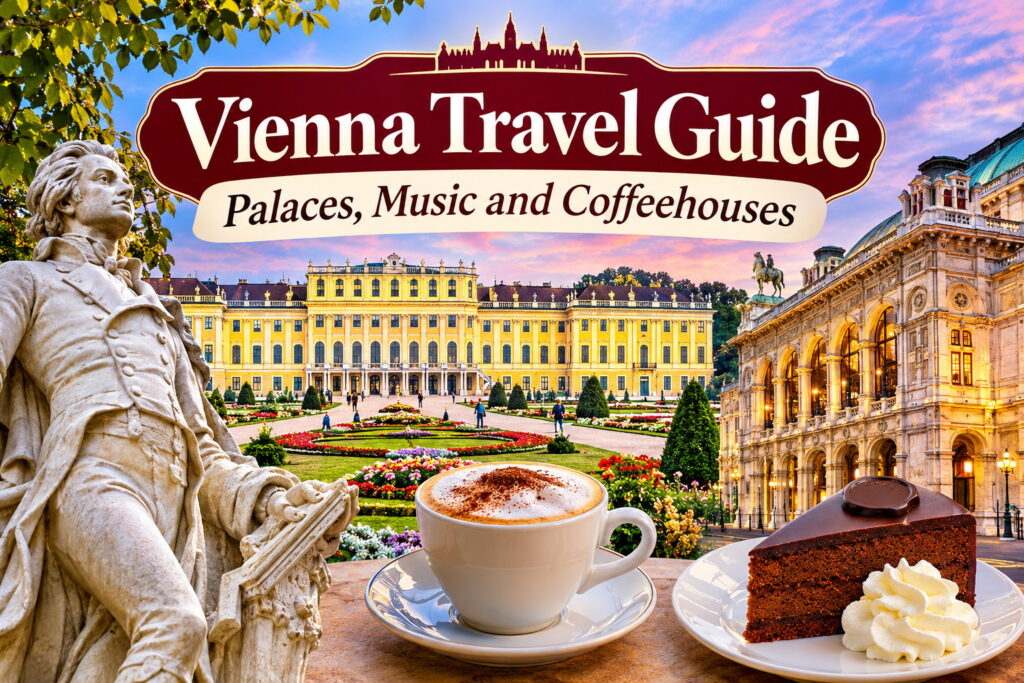
Vienna Travel Guide: Palaces, Music and Coffeehouses
Discover the imperial beauty of Vienna, Austria, from magnificent royal palaces and legendary classical music venues to historic coffeehouses and charming European streets.


Vienna, the capital of Austria, is a city where imperial grandeur, classical music, and timeless coffeehouse traditions create an unforgettable travel experience. Famous for its magnificent palaces, historic landmarks, world-class museums, and elegant streets, Vienna is among Europe’s most rewarding cultural destinations.
For centuries, Vienna was the political and cultural center of the Habsburg Empire. Today, its remarkable architectural heritage blends with contemporary art, excellent restaurants, shopping streets, and lively public spaces.
Whether you are visiting for a weekend or spending several days exploring Austria’s capital, this Vienna travel guide highlights the best attractions, memorable experiences, local food, and practical travel tips.
1. Explore Vienna’s Magnificent Imperial Palaces
Schönbrunn Palace
Schönbrunn Palace is one of Austria’s most important historical attractions and a UNESCO World Heritage Site. This magnificent Baroque residence once served as the summer home of the Habsburg imperial family.
Inside, visitors can explore richly decorated imperial rooms, elegant furnishings, and exhibitions about royal life. Outside, the extensive palace gardens offer walking paths, fountains, impressive sculptures, and beautiful views.
One of the most recognizable features is the Gloriette, a monumental structure standing on a hill overlooking the palace gardens.
Travel tip: Reserve several hours for Schönbrunn, especially if you plan to visit the palace interiors and gardens.
Official website: Schönbrunn Palace.
Hofburg Palace


Located in the heart of Vienna, the Hofburg Palace was the principal imperial residence of the Habsburg rulers for centuries.
The enormous palace complex includes historic apartments, museums, courtyards, and important cultural institutions.
Highlights include the Imperial Apartments, the Sisi Museum, and the nearby Spanish Riding School, famous for its Lipizzaner horses and classical equestrian tradition.
Hofburg is conveniently situated near several major attractions, making it an essential stop on a walking tour of central Vienna.
Belvedere Palace

The Belvedere Palace is another architectural masterpiece and one of Vienna’s leading art destinations.
Originally constructed as a residence for Prince Eugene of Savoy, the complex includes the Upper Belvedere, Lower Belvedere, and landscaped Baroque gardens.
Upper Belvedere is particularly famous for its collection of Austrian art, including Gustav Klimt’s celebrated painting The Kiss.
Visitors can admire magnificent palace interiors while exploring paintings and sculptures from different periods of art history.
Official website: Belvedere Museum.
2. Discover Vienna’s Extraordinary Musical Heritage

Vienna has a remarkable place in the history of classical music. The city is closely associated with composers including Wolfgang Amadeus Mozart, Ludwig van Beethoven, Franz Schubert, Joseph Haydn, and Johann Strauss II.
Classical music remains an important part of Vienna’s identity, with concerts, operas, and performances presented throughout the year.
Vienna State Opera
The Vienna State Opera is among Europe’s most prestigious opera houses. Its performances include celebrated operas and ballet productions featuring internationally recognized performers.
Visitors can purchase tickets for a performance or explore the building through a guided tour when available.
Official website: Vienna State Opera.
Musikverein
The Musikverein is famous for its Golden Hall, an exceptional concert venue associated with the Vienna Philharmonic Orchestra.
Its magnificent interiors and renowned acoustics make it one of the most desirable places to experience classical music in Vienna.
Mozart and Beethoven Experiences
Music enthusiasts should consider visiting Mozarthaus Vienna, a museum located in a former Mozart residence, and the Beethoven Museum, dedicated to the composer’s life and work.
The interactive Haus der Musik is another excellent attraction, offering exhibitions about sound, musical instruments, and Vienna’s musical heritage.
3. Experience Vienna’s Legendary Coffeehouse Culture


Vienna’s traditional coffeehouses are much more than places to enjoy a drink. They have served as gathering spaces for writers, musicians, artists, intellectuals, and local residents for generations.
Many classic cafés feature high ceilings, marble tables, elegant furniture, newspapers, and beautifully displayed pastries.
The atmosphere encourages visitors to relax rather than rush through their coffee.
Famous Viennese Coffeehouses
- Café Sacher: Famous for its association with the Original Sacher-Torte.
- Café Landtmann: A celebrated historic café with an elegant traditional interior.
- Café Sperl: Known for its classic Viennese atmosphere and historic furnishings.
- Café Central: A renowned literary coffeehouse historically associated with notable writers and thinkers. Its historic premises are undergoing renovation in 2026, so check current arrangements before visiting.
What to Order at a Viennese Café


Popular coffeehouse specialties include:
- Wiener Melange: A traditional Viennese coffee with steamed milk and foam.
- Sachertorte: Rich chocolate cake with an apricot jam layer and chocolate coating.
- Apfelstrudel: Apple-filled pastry, often enjoyed warm.
- Kaiserschmarrn: Light, shredded pancakes traditionally served with fruit compote.
A visit to a traditional coffeehouse is one of the most enjoyable ways to experience Vienna’s everyday culture.
4. Walk Through Vienna’s Historic City Center


Vienna’s historic center is a UNESCO World Heritage Site, filled with grand buildings, charming squares, churches, and pedestrian shopping streets.
St. Stephen’s Cathedral
Located at Stephansplatz, St. Stephen’s Cathedral is one of Vienna’s most recognizable landmarks.
Its Gothic architecture, distinctive tiled roof, and towering spire make it an essential sightseeing destination.
Visitors can explore parts of the cathedral and, depending on access and ticket arrangements, enjoy views from its towers.
Graben and Kohlmarkt
These elegant pedestrian streets feature historic architecture, luxury boutiques, traditional shops, and attractive cafés.
They are ideal for a leisurely walk through the center of Vienna.
Ringstrasse Boulevard
The Ringstrasse is a monumental boulevard surrounding much of Vienna’s historic inner city.
Its impressive buildings include the Vienna State Opera, Austrian Parliament, Vienna City Hall, and major cultural institutions.
Walking or taking a tram along the boulevard provides an excellent introduction to Vienna’s architecture.
5. Visit Vienna’s Museums and Cultural Attractions
Vienna offers an exceptional range of museums and galleries for visitors interested in art, history, science, and culture.
- Kunsthistorisches Museum: One of Europe’s great art museums, with important collections of paintings and historical objects.
- Albertina: Famous for its graphic art collections and exhibitions.
- MuseumsQuartier: A cultural district combining museums, contemporary art spaces, restaurants, and public courtyards.
- Natural History Museum: Features extensive collections covering natural history, minerals, prehistoric life, and biodiversity.
Museum lovers can comfortably spend an entire day discovering Vienna’s cultural institutions.
6. Enjoy Vienna’s Parks and Outdoor Attractions
Although Vienna is famous for grand architecture, it also has extensive green spaces and enjoyable outdoor attractions.
Prater and the Giant Ferris Wheel
The Prater is one of Vienna’s best-known recreational areas, featuring a historic amusement park and the famous Wiener Riesenrad, or Giant Ferris Wheel.
The Ferris wheel offers memorable views across the city and is especially atmospheric in the evening.
Stadtpark
Stadtpark is a beautiful public park with winding paths, landscaped lawns, and monuments. The golden statue of Johann Strauss II is one of its most photographed features.
Danube Island
Donauinsel, or Danube Island, provides outdoor recreation opportunities including walking, cycling, and relaxing near the river.
It is particularly enjoyable during warmer months.
7. Discover Traditional Viennese Food
Viennese cuisine reflects centuries of cultural exchange throughout Central Europe and the former Habsburg Empire.
Some of the city’s best-known specialties include:
- Wiener Schnitzel: A thin, breaded, fried cutlet traditionally made with veal.
- Tafelspitz: Tender boiled beef served with traditional accompaniments.
- Gulasch: A rich, paprika-seasoned meat stew.
- Apfelstrudel: A classic apple pastry.
- Kaiserschmarrn: A sweet shredded pancake dish.
For an interesting food experience, explore the Naschmarkt, a lively market with produce vendors, specialty foods, and restaurants serving Austrian and international cuisine.
8. Best Time to Visit Vienna
| Season | Travel Experience |
|---|---|
| Spring (March–May) | Blooming gardens, mild weather, and pleasant sightseeing. |
| Summer (June–August) | Long days, outdoor activities, festivals, and busier attractions. |
| Autumn (September–November) | Colorful parks, cooler temperatures, and a lively cultural calendar. |
| Winter (December–February) | Festive Christmas markets, seasonal decorations, and cozy coffeehouses. |
Recommended periods: April to May and September to October generally provide a pleasant balance of weather and sightseeing opportunities.
December is especially attractive for visitors interested in Vienna’s famous Christmas markets and festive atmosphere.
9. Three-Day Vienna Travel Itinerary
Day 1: Historic Vienna and Classical Music
- Start at St. Stephen’s Cathedral.
- Walk along Graben and Kohlmarkt.
- Explore Hofburg Palace and its museums.
- Enjoy coffee and cake at a traditional café.
- Attend an evening opera or classical concert.
Day 2: Imperial Palaces and Art
- Visit Schönbrunn Palace in the morning.
- Explore its gardens and the Gloriette.
- Travel to Belvedere Palace.
- See Gustav Klimt’s famous artworks.
- Enjoy dinner at a traditional Austrian restaurant.
Day 3: Museums, Markets and Outdoor Experiences
- Visit the Kunsthistorisches Museum or Albertina.
- Explore Naschmarkt for lunch.
- Relax at Stadtpark or explore MuseumsQuartier.
- Visit the Prater amusement park.
- Enjoy a final Viennese coffeehouse experience.
10. Practical Vienna Travel Tips
Getting Around
Vienna has an excellent public transport network, including the U-Bahn subway, trams, buses, and urban rail services.
Many central attractions are within walking distance of each other. Public transport is particularly useful for reaching Schönbrunn Palace and destinations outside the historic center.
Check current fares and ticket options at Wiener Linien.
Arriving in Vienna
Vienna International Airport connects the city with destinations across Europe and beyond.
Airport transport options include railway connections, airport buses, taxis, and private transfers. Check current services before traveling, as some rail connections are affected by infrastructure work during 2026 and 2027.
Language and Currency
The official language is German, although English is widely spoken in major tourist areas.
Austria uses the euro (EUR). Credit cards are commonly accepted, but carrying some cash is useful for smaller establishments and markets.
How Many Days Do You Need?
Three days is a good starting point for Vienna’s main attractions. Four or five days allows more time for museums, performances, relaxed coffeehouse visits, and nearby excursions.
Useful Travel Information
- Book major palace visits and popular concerts in advance.
- Wear comfortable walking shoes.
- Check museum opening days and admission prices.
- Allow extra time for Schönbrunn and the Belvedere.
- Respect photography restrictions inside palaces and museums.
Conclusion: Why Vienna Deserves a Place on Your Travel List
Vienna is a city where history, music, art, and everyday elegance come together beautifully. Its extraordinary imperial palaces reveal the grandeur of the Habsburg era, while its famous concert halls celebrate an enduring musical tradition.
Beyond the major landmarks, Vienna’s charming streets, historic cafés, peaceful gardens, and delicious cuisine create a travel experience that is both culturally rich and wonderfully relaxing.
Whether you are admiring Schönbrunn Palace, enjoying a classical performance, or savoring Sachertorte in a traditional coffeehouse, Vienna offers memorable experiences around every corner.
For travelers seeking European history, exceptional architecture, world-class music, and timeless café culture, Vienna is an outstanding destination.
Official Travel Resources
Photo Credits and Licensing
Photographs are sourced from Wikimedia Commons. Credit and licensing information:
- Schönbrunn Palace — Yair Haklai; see Commons file page for reuse terms.
- Hofburg Palace — Sandor Somkuti, CC BY-SA 4.0.
- Belvedere Palace — Olga1969, CC BY 4.0.
- Vienna State Opera — Michał Bulsa; see Commons file page for reuse terms.
- Café Central interior — Gryffindor, public domain.
- Sachertorte — Häferl, CC BY-SA 3.0 Austria.
- St. Stephen’s Cathedral — Martin, public domain.


Creative Commons license details: CC BY 4.0, CC BY-SA 4.0, CC BY-SA 3.0 Austria. Check individual file pages before redistribution, especially for share-alike and attribution requirements.