

Views: 0
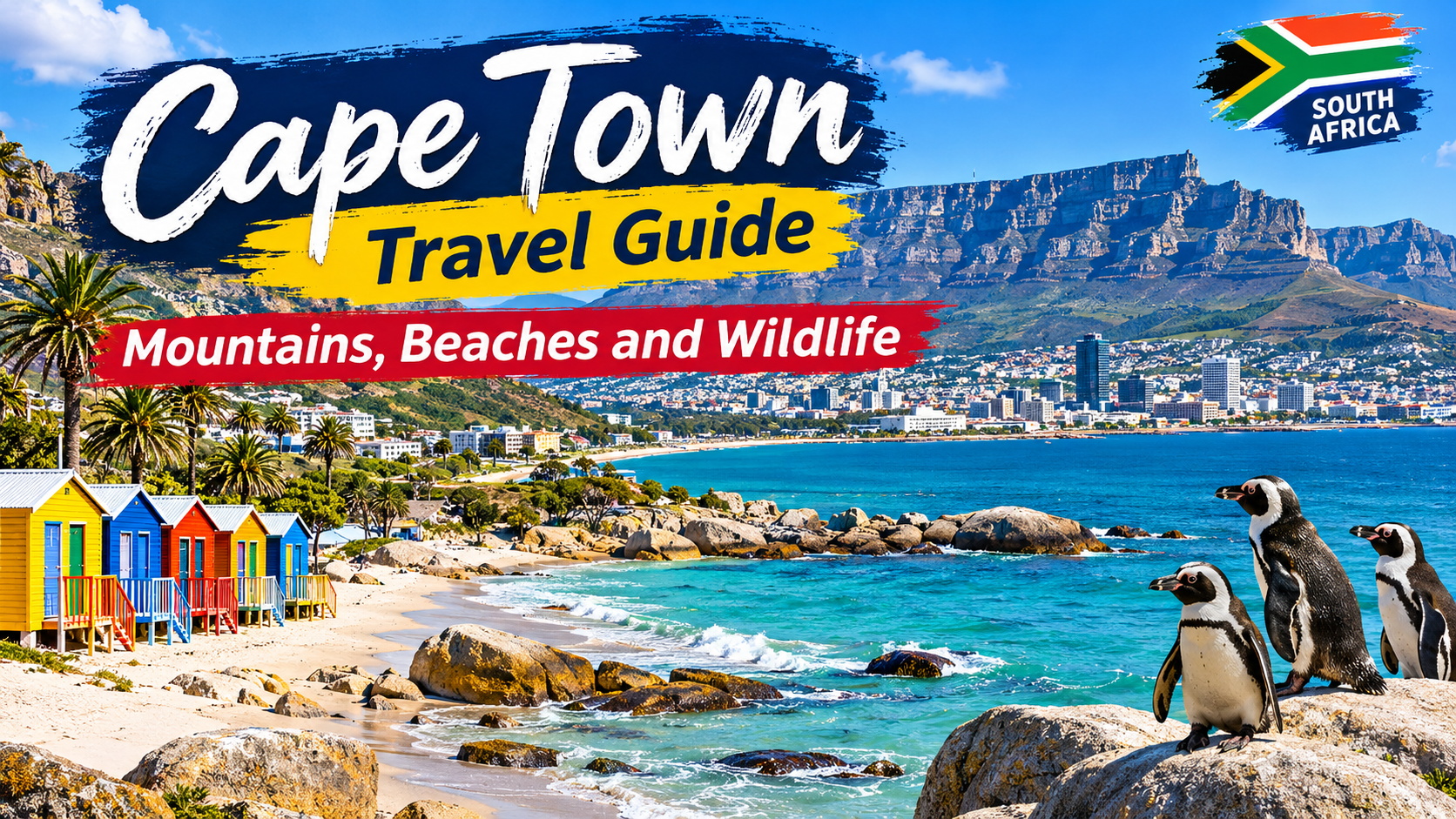
Cape Town Travel Guide: Mountains, Beaches and Wildlife
Cape Town, South Africa, is one of the world’s most spectacular coastal destinations. Framed by dramatic mountains, beautiful beaches, and wildlife-rich waters, the city offers an extraordinary combination of natural beauty, outdoor adventure, history, and culture.
From hiking Table Mountain and exploring the Cape Peninsula to observing African penguins at Boulders Beach, Cape Town is a destination where unforgettable experiences are never far away.

1. Table Mountain: Cape Town’s Most Famous Landmark
Table Mountain is the defining symbol of Cape Town. Its distinctive flat summit rises above the city, offering panoramic views of the Atlantic Ocean, Table Bay, and the surrounding mountains.
Visitors can reach the summit using the Table Mountain Aerial Cableway or choose one of several hiking trails. The popular Platteklip Gorge trail provides a direct but physically demanding ascent.
At the summit, walking paths lead to spectacular viewpoints, and visitors can discover unique fynbos vegetation and occasionally spot rock hyraxes, locally called dassies.

Tips for Visiting Table Mountain
- Visit during clear weather for the best views.
- Check cableway operations before traveling.
- Bring water, sunscreen, and a light jacket.
- Use established hiking paths and avoid hiking alone.
- Allow time to explore the summit viewpoints.
2. Lion’s Head: A Scenic Hiking Adventure
Lion’s Head is another famous mountain overlooking Cape Town. The summit offers impressive 360-degree views of Table Mountain, Signal Hill, Camps Bay, and the Atlantic coastline.
The hiking trail spirals around the mountain and includes rocky sections, with some routes involving ladders and chains. The hike is especially popular for sunrise and sunset, although daylight hiking is safer for inexperienced visitors.
Proper hiking shoes, drinking water, and suitable weather conditions are essential. The mountain should not be underestimated, particularly in strong winds or poor visibility.
3. Camps Bay: Mountains Meet the Ocean
Camps Bay is among Cape Town’s most photographed coastal destinations. Its broad sandy beach is backed by the dramatic Twelve Apostles mountain range, creating one of the city’s most recognizable landscapes.
The beachfront is lined with restaurants, cafés, and places to enjoy a relaxed meal while watching the Atlantic Ocean.

Popular activities at Camps Bay include beach walks, photography, dining, and watching the sunset. The Atlantic water is often cold, and ocean conditions can be challenging, so swimming should be limited to safe, supervised areas.
4. Clifton Beaches: Beautiful White Sand
Clifton is famous for its four beaches, separated by large granite boulders. These beaches are known for pale sand, scenic surroundings, and beautiful Atlantic views.
Each beach has its own atmosphere, making Clifton popular with beachgoers, couples, and photographers. Fourth Beach is particularly well known and attracts visitors during Cape Town’s warm summer months.
Although the sheltered beaches can be comfortable on windy days, the sea remains cold throughout much of the year.
5. Muizenberg Beach: Surfing and Colorful Beach Huts
Muizenberg, located along False Bay, is one of Cape Town’s best-known surfing destinations. Its long sandy beach and colorful beach huts make it especially attractive for photography.

Surf schools offer lessons for beginners, while the beachfront has cafés and places to relax. Visitors should follow local beach safety guidance, including any shark-spotting alerts and lifeguard instructions.
6. Boulders Beach: Meet the African Penguins
One of Cape Town’s most extraordinary wildlife experiences is visiting Boulders Beach, near Simon’s Town.
This protected coastal area is home to a colony of endangered African penguins. Visitors can observe these remarkable birds from designated boardwalks as they rest among granite boulders, walk across the sand, and swim in the sheltered water.

Responsible Penguin Viewing
- Remain on designated paths and boardwalks.
- Never touch, feed, or chase penguins.
- Keep a respectful distance from nesting birds.
- Follow conservation-area instructions.
- Check current entry fees and visiting hours.
Boulders Beach is part of Table Mountain National Park, and conservation fees support the management of this important wildlife habitat.
7. Cape Point and the Cape of Good Hope
The Cape Peninsula offers some of South Africa’s most dramatic coastal landscapes.
Cape Point is known for its rugged cliffs, historic lighthouse, walking trails, and expansive ocean views. Nearby, the Cape of Good Hope features wild coastal scenery and important natural habitats.

Wildlife sightings may include ostriches, antelope, seabirds, and chacma baboons. Visitors must avoid feeding baboons and should keep food securely stored.
Despite a common misconception, Cape Point is not the southernmost point of Africa. That geographic distinction belongs to Cape Agulhas, farther east.
8. Cape Town’s Wildlife and Marine Experiences
Cape Town’s natural environment supports a fascinating variety of land and marine wildlife.
Whale Watching
Southern right whales migrate to the Western Cape coast seasonally. Whale-watching opportunities are often strongest during the colder months, although sightings vary with location, weather, and natural migration patterns.
Cape Fur Seals
Boat excursions from Hout Bay can provide opportunities to observe Cape fur seal colonies around offshore islands and rocks.
Birdwatching
The Cape Peninsula and surrounding nature reserves provide habitat for numerous bird species, including seabirds, raptors, and birds associated with the region’s unique fynbos vegetation.
Ostriches and Antelope
Visitors exploring Cape Point may encounter ostriches and several antelope species in their natural coastal habitats.
9. Explore the Colorful Streets of Bo-Kaap
Bo-Kaap is one of Cape Town’s most recognizable historic neighborhoods. It is famous for its colorful houses, cobbled streets, and Cape Muslim cultural heritage.

Walking through Bo-Kaap allows visitors to appreciate traditional architecture, local food, and the area’s rich history. As it is a residential neighborhood, visitors should respect residents’ privacy while taking photographs.
10. Kirstenbosch Botanical Garden
Kirstenbosch National Botanical Garden lies against the eastern slopes of Table Mountain and is internationally recognized for its remarkable collection of indigenous South African plants.
The garden features landscaped walking paths, spectacular mountain views, seasonal flowers, and the elevated Centenary Tree Canopy Walkway.
It is an excellent destination for families, nature lovers, and photographers seeking a peaceful experience away from the city’s busier attractions.
11. V&A Waterfront and Robben Island
The Victoria & Alfred Waterfront is one of Cape Town’s most popular visitor districts. Its working harbor setting includes restaurants, shops, entertainment venues, museums, and impressive views toward Table Mountain.
From the waterfront, visitors can also arrange trips to Robben Island, a UNESCO World Heritage Site closely associated with South Africa’s apartheid history and Nelson Mandela’s imprisonment.
Robben Island visits depend on ferry availability and weather conditions, so advance booking and schedule checks are recommended.
12. Best Time to Visit Cape Town
| Season | Months | Best Activities |
|---|---|---|
| Summer | December–February | Beaches, outdoor dining, sunsets |
| Autumn | March–May | Hiking, sightseeing, scenic drives |
| Winter | June–August | Whale watching, greener scenery |
| Spring | September–November | Wildflowers, outdoor exploration |
For a first visit, March–April and October–November can provide a pleasant combination of outdoor activities and sightseeing opportunities. Summer is ideal for beach-focused holidays but generally attracts larger crowds.
13. Suggested Four-Day Cape Town Itinerary
Day 1: Table Mountain and the City
Begin with Table Mountain during suitable weather. Explore the colorful streets of Bo-Kaap before spending the evening at the V&A Waterfront.
Day 2: Beautiful Beaches
Discover Clifton and Camps Bay, enjoy lunch overlooking the Atlantic Ocean, and spend the afternoon exploring the coastal scenery.
Day 3: Penguins and Cape Peninsula
Take a full-day journey to Boulders Beach, Cape Point, and the Cape of Good Hope. Enjoy scenic viewpoints and opportunities to observe wildlife.
Day 4: Gardens and Cultural Attractions
Visit Kirstenbosch Botanical Garden before exploring additional museums, neighborhoods, or waterfront attractions.
14. Essential Cape Town Travel Tips
- Transport: Use reputable ride-hailing services, organized tours, or a rental vehicle.
- Safety: Avoid isolated areas after dark and keep valuables secure.
- Hiking: Follow marked trails, check weather forecasts, and travel with companions.
- Beaches: Swim only where conditions are safe and lifeguards are present.
- Wildlife: Never feed wild animals or approach them closely.
- Weather: Bring layers because mountain and coastal weather can change quickly.
- Planning: Confirm current opening hours, entrance fees, and tour availability before visiting.
15. Frequently Asked Questions About Cape Town
How many days should I spend in Cape Town?
Four to five days is a good starting point for the main attractions. A week provides more time for beaches, nature reserves, scenic drives, and day trips.
Is Cape Town suitable for families?
Yes. Families can enjoy beaches, botanical gardens, penguin viewing, the waterfront, and organized nature excursions. Appropriate safety precautions remain important.
Can you see wild penguins in Cape Town?
Yes. Boulders Beach near Simon’s Town is famous for its protected African penguin colony.
Does Cape Town have good hiking?
Yes. Table Mountain, Lion’s Head, and the Cape Peninsula offer numerous trails with varying levels of difficulty.
When is Cape Town’s beach season?
Summer, from December to February, is generally the most popular period for beaches and outdoor coastal activities.
Conclusion: Discover the Natural Beauty of Cape Town
Cape Town is an extraordinary destination where towering mountains, beautiful beaches, fascinating wildlife, and cultural heritage come together.
Whether you are hiking Table Mountain, watching African penguins at Boulders Beach, exploring the Cape Peninsula, or relaxing beside the Atlantic Ocean, Cape Town offers memorable experiences for almost every type of traveler.
With thoughtful planning and respect for the local environment, a journey to Cape Town can become one of the highlights of any South African adventure.


